Goal of the project
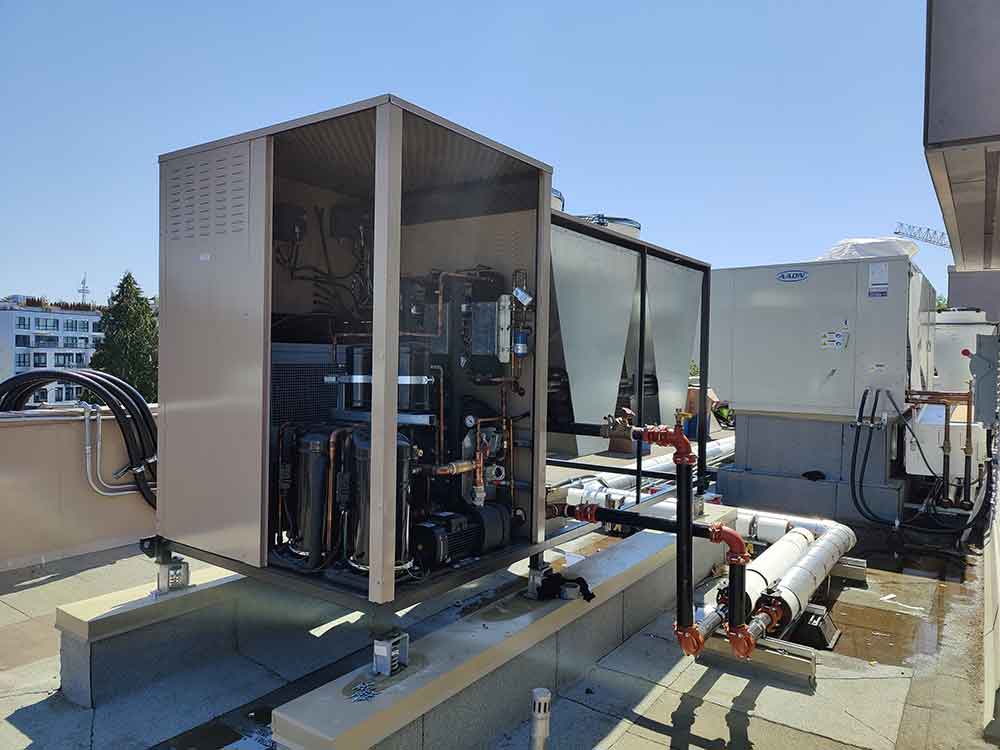
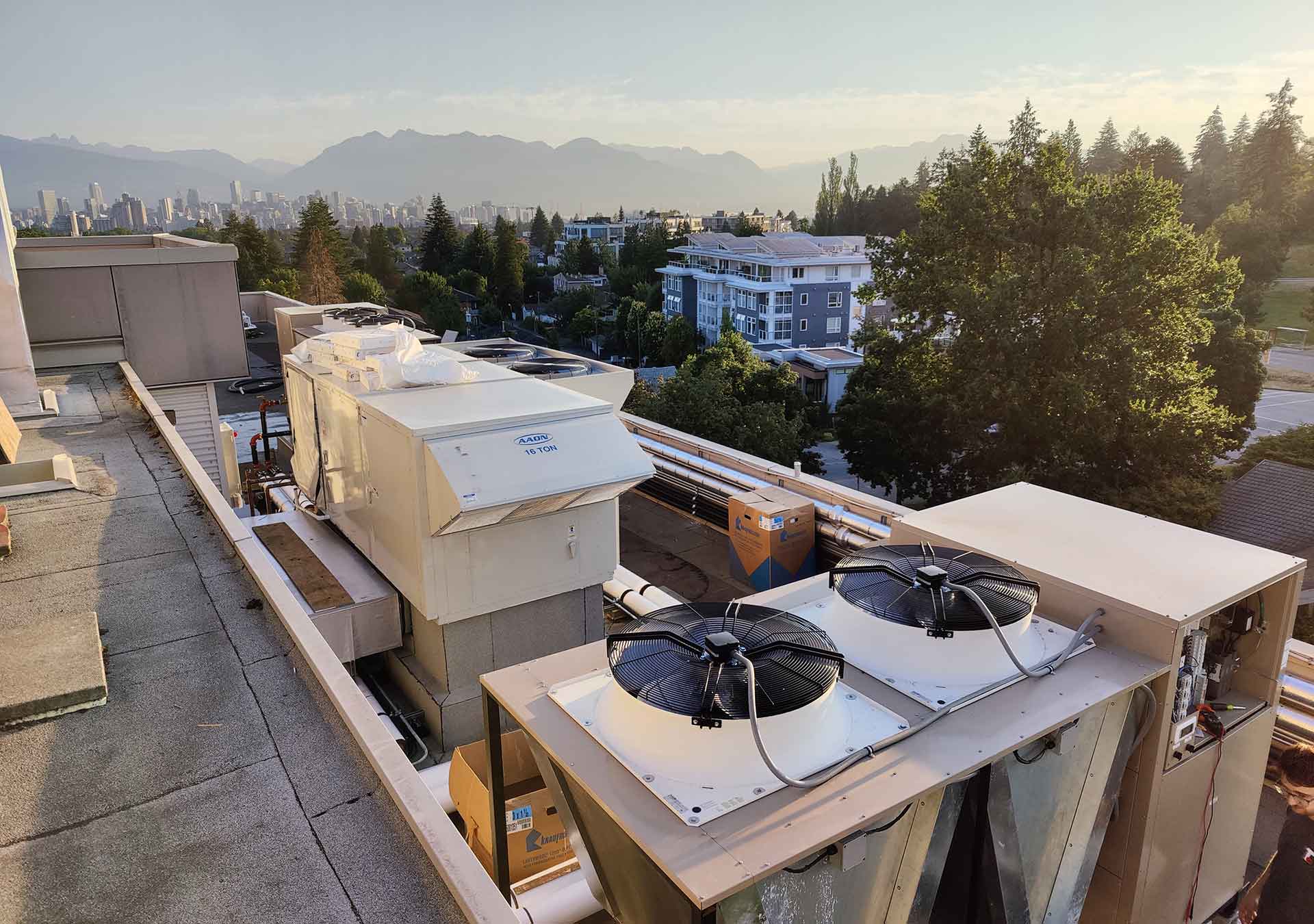
Providence Health Care set a target to reduce operational GHG emissions at the Youville residence by 80% — an ambitious objective for a long-term care facility built in 1969 with a decades-old heating system still in daily service. The project introduced a complex hybrid heating arrangement, adding several air-source heat pumps to supply the existing heating system while retaining the boiler plant to deliver higher-temperature heat when required and to meet the redundancy standards mandated in healthcare buildings. The goal was to shift as much of the annual heating load as possible to the heat pumps without compromising resident comfort or system reliability.
How did KCx achieve goal
KCx delivered commissioning and balancing for the project, then extended the engagement through a monitoring-based commissioning (MBCx) process using the clistek.io data analytics platform — allowing the system to be optimized against real operating data over time rather than tuned once at handover.
A central challenge emerged around controlling the mixing of low- and high-temperature heat sources. This is a recurring difficulty on hybrid heating systems and remains one of the more stubborn technical barriers to decarbonizing existing buildings: without effective control, the boiler plant tends to displace heat pump operation far earlier than necessary. The KCx team designed a flow control system within an existing hot water header to decouple specific loads from the boiler plant, extending heat pump operation even during periods when the heat pumps alone could not satisfy the requirements of every area in the building. The facility has since achieved monthly emissions reductions in the range of 50–80% during shoulder seasons, with optimization ongoing.